
- By admin
- November 2, 2026
- 0 Comment
Transformer Oil Resistant Gasket: 6 Things to Check Before You Specify One
“We need an oil-resistant gasket for this transformer.”
Sounds like a complete specification. But it really isn’t.
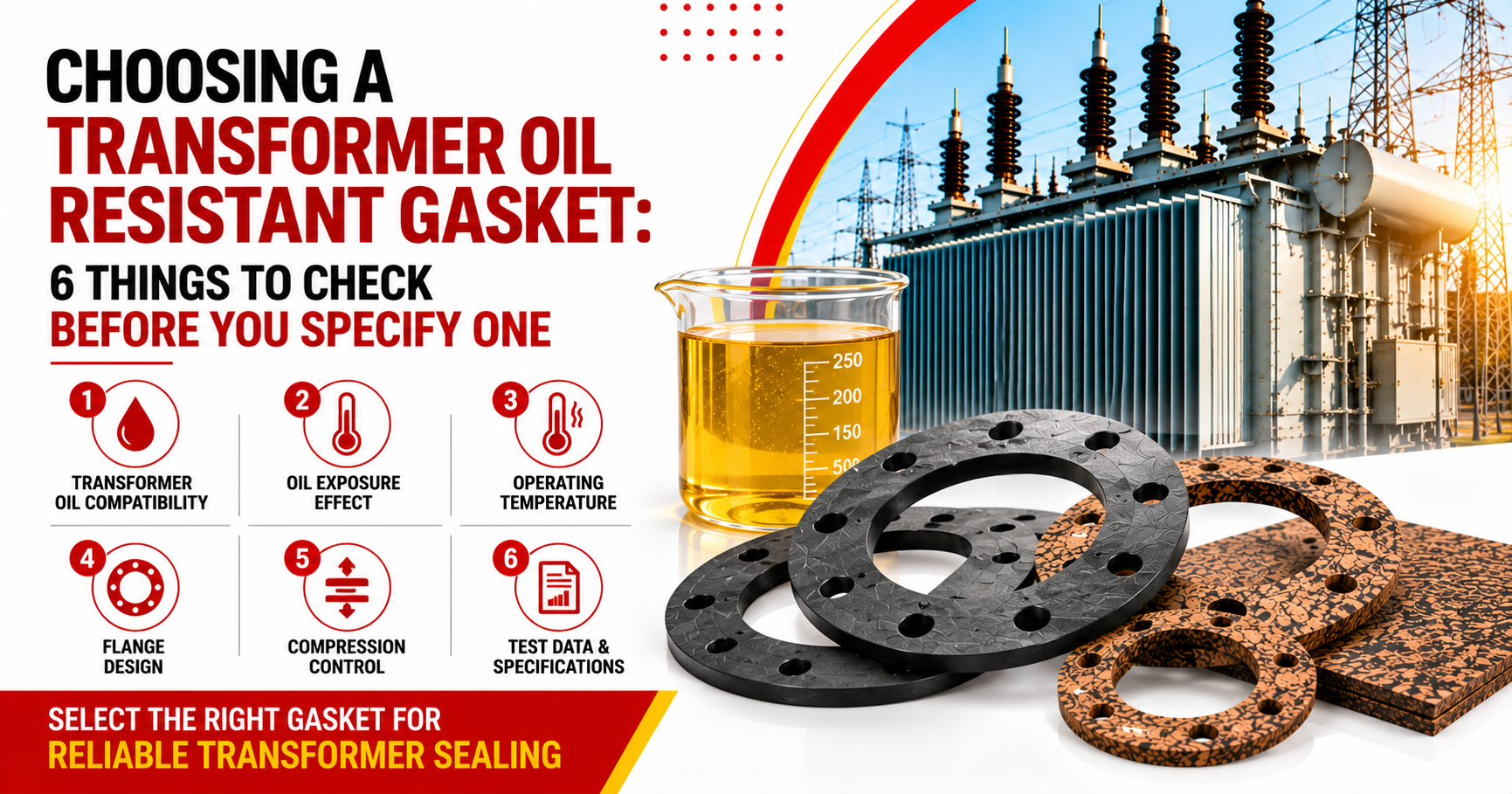
A Transformer Oil Resistant Gasket can be labelled oil-resistant and still be unsuitable for a particular transformer joint. The correct choice depends on the insulating fluid, operating temperature, flange design, compression requirements and material test data.
Whether you are selecting an NBR gasket or an NBR-bonded rubberised cork gasket, these six factors can help you make a more informed decision.
Which Transformer Oil Will the Gasket Contact?
Start with the fluid.
Mineral transformer oil, natural ester fluids and synthetic ester fluids can interact differently with elastomers. Compatibility should not be assumed simply because a gasket is described as oil-resistant.
Before specifying a Transformer Oil Resistant Gasket, confirm the type of insulating fluid used in your transformer and check the compatibility of the specific gasket compound with that fluid.
The material should be evaluated against the actual application requirements, including temperature and expected exposure duration.
Learn more about NBR gaskets for oil-filled transformers and the factors that influence their suitability.
What Happens After Oil Exposure?
Oil resistance is not simply a yes-or-no property.
A suitable evaluation may consider changes in:
- Volume and dimensions
- Hardness
- Tensile properties
- Flexibility and elasticity
- Overall physical condition
When selecting a Transformer Oil Resistant Gasket, ask for relevant test data instead of relying only on a general oil-resistance claim.
For a more detailed comparison, read NBR Gasket vs. Rubber Cork Gasket for Transformers.
What Temperature Will the Gasket Experience?
Oil compatibility and temperature should be considered together.
A gasket may perform differently at elevated temperatures or after prolonged exposure to heat. Temperature can influence material ageing, hardness, flexibility and dimensional stability.
Before specifying an oil-resistant transformer gasket, consider:
- Expected operating temperature
- Duration of exposure to elevated temperatures
- Transformer oil type
- Material grade and compound formulation
- Required service life
Do not select a gasket based on oil resistance alone. Its properties should be suitable for the expected operating conditions throughout its intended service life.
What Is the Flange Design?
This factor is often overlooked.
Is the joint a flat flange or a grooved flange? The answer can influence which gasket construction is appropriate.
Solid NBR gaskets can be suitable for properly designed grooves where the gasket profile and groove dimensions are compatible. NBR-bonded rubberised cork is commonly used in suitable flat-flange applications because its compressibility can help accommodate minor surface irregularities.
However, neither material is universally suitable for every joint. The correct selection depends on the gasket specification, flange geometry and service conditions.
For example, a Transformer Oil Resistant Gasket for a grooved joint may have different requirements from one used between flat transformer tank-cover flanges.
Explore these guides for more information:
How Will Gasket Compression Be Controlled?
Even a suitable gasket material can fail to seal properly if the joint is designed or assembled incorrectly.
Too little compression may result in insufficient sealing contact. Excessive compression can deform the gasket, damage its structure or affect its ability to maintain a reliable seal.
Important factors include:
Gasket thickness and hardness
Compressibility and recovery
Bolt spacing and tightening sequence
Flange rigidity and surface condition
Gasket dimensions and joint geometry
More tightening does not always mean better sealing. The appropriate compression and tightening procedure should follow the gasket and joint specifications.
When specifying a Transformer Oil Resistant Gasket, consider the complete sealing arrangement rather than evaluating the gasket material in isolation.
Read more about how gaskets work in an electrical transformer.
What Does the Test Data Actually Say?
A specification that says only “Material: NBR” and “Oil resistant: Yes” does not provide enough information to assess every application.
Ask for meaningful technical data, including:
- Which test fluid was used?
- At what temperature was the material tested?
- How long was the exposure?
- What changes in volume and hardness were measured?
- Were tensile properties or other physical properties evaluated?
- Which test method and acceptance criteria apply?
The answers help you assess whether the material is appropriate for the intended service conditions.
A Transformer Oil Resistant Gasket should be selected using relevant material data and application requirements—not just a product description.
Choosing a Transformer Oil Resistant Gasket Manufacturer
When sourcing a Transformer Oil Resistant Gasket, look for a manufacturer or supplier that can help you evaluate the material grade, joint design, dimensions and relevant technical specifications.
Before finalising your selection, confirm:
- Compatibility with the specified transformer oil
- Suitability for the operating temperature
- Correct gasket dimensions and thickness
- Compatibility with the flange or groove design
- Relevant test data and quality requirements
Pristine Technologies & Industries provides transformer-related sealing and insulation products. You can explore the company’s transformer gasket products and solutions to learn more about available options.
For detailed information on transformer gaskets, visit Transformers Gaskets to explore the book website mentioned in this article.
Frequently Asked Questions (FAQs)
1. What is a transformer oil-resistant gasket?
A transformer oil-resistant gasket is a sealing component made from a material selected to withstand contact with the specified transformer insulating fluid while maintaining the required sealing performance.
2. Is NBR suitable for transformer oil-resistant gaskets?
Some NBR compounds are suitable for transformer oil applications. However, suitability depends on the specific compound, insulating fluid, temperature, exposure duration and joint design.
3. Is rubberised cork suitable for transformer oil?
NBR-bonded rubberised cork is used in suitable transformer sealing applications. Its performance depends on the material formulation, oil compatibility, compression requirements and operating conditions.
4. What should I check before specifying a transformer gasket?
Check the oil type, temperature, flange design, gasket dimensions, compression requirements and relevant test data before approving a gasket for a particular application.
5. Can an oil-resistant gasket still leak?
Yes. Leakage can occur because of unsuitable material selection, incorrect dimensions, inadequate or excessive compression, poor flange condition or improper installation—even when the gasket material has oil-resistant properties.
Conclusion
Selecting the right Transformer Oil Resistant Gasket involves more than choosing a material described as oil-resistant. Oil compatibility, temperature, flange design, compression and test data all influence sealing performance.
By evaluating these six factors before specifying a gasket, transformer manufacturers, engineers and maintenance teams can make more informed material selections and reduce the risk of avoidable sealing problems.
To learn more about transformer gaskets and industrial sealing solutions, visit Pristine Technologies & Industries.