
- By admin
- July 16, 2026
- 0 Comment
Rubberized Cork Sheets: Key Factors for Selecting the Right Material
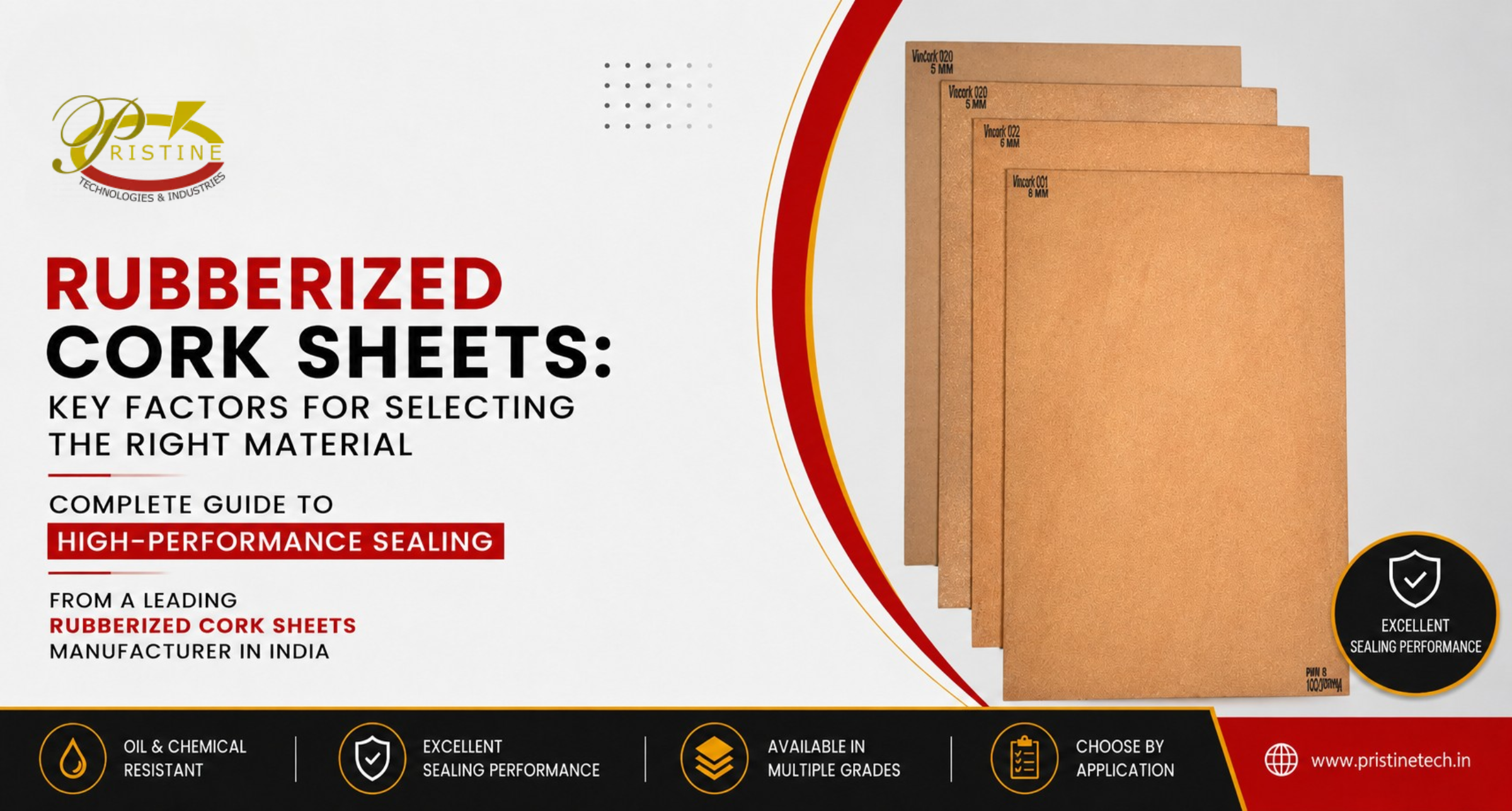
Rubberized cork sheets are widely used across industries for their excellent sealing performance, compressibility, durability and resistance to oil and chemicals. They play a crucial role in manufacturing transformer gaskets, automotive seals, industrial machinery gaskets, compressors, pumps and electrical equipment. Choosing the right rubberized cork sheet is essential to ensure reliable performance, reduce maintenance costs and extend equipment life.
With different grades, thicknesses and material compositions available in the market, selecting the most suitable rubberized cork sheet can be challenging. This guide highlights the key factors you should consider before making the right choice for your industrial application.
What Are Rubberized Cork Sheets?
Rubberized cork sheets are composite materials made by combining natural cork granules with synthetic rubber binders such as NBR (Nitrile Butadiene Rubber), Neoprene or EPDM. This unique combination offers excellent flexibility, resilience, oil resistance and sealing capabilities, making them suitable for demanding industrial environments.
- Power and distribution transformers
- Electrical switchgear
- Pumps and compressors
- Industrial machinery
- Automotive engines
- Oil-filled equipment
- Hydraulic systems
Key Factors for Selecting the Right Rubberized Cork Sheets
1. Type of Rubber Binder
NBR Rubberized Cork
- Excellent resistance to transformer oil
- Ideal for oil sealing applications
- High mechanical strength
- Commonly used in transformer gaskets
Neoprene Rubberized Cork
- Good weather resistance
- Resistant to ozone and chemicals
- Suitable for outdoor industrial equipment
2. Oil Resistance
- Resist swelling
- Prevent leakage
- Maintain flexibility
- Provide long-lasting sealing performance
3. Thickness Selection
Rubberized cork sheets are available in various thicknesses to meet different sealing requirements.
Common thickness options include:
- 1 mm
- 1.5 mm
- 2 mm
- 3 mm
- 5 mm
- Custom thicknesses
4. Density and Compressibility
Good compressibility ensures that the gasket adapts to uneven flange surfaces and provides a leak-proof seal.
Look for sheets offering:
- Uniform density
- Excellent recovery after compression
- High flexibility
- Long-lasting sealing performance
5. Temperature Resistance
Industrial machinery often operates under extreme temperatures.
The selected rubberized cork sheet should withstand:
- High operating temperatures
- Low-temperature environments
- Thermal expansion
- Continuous heat exposure
Benefits of High-Quality Rubberized Cork Sheets
- Excellent oil resistance
- Superior sealing performance
- High compressibility
- Long service life
- Reduced maintenance costs
- Leak prevention
- Excellent flexibility
- Chemical resistance
- Reliable performance in demanding industrial applications
Why Choose Pristine Technologies & Industries?
Pristine Technologies & Industries is a trusted manufacturer and exporter of high-quality rubberized cork sheets designed for industrial sealing applications. Our products are engineered to deliver reliable performance, durability, excellent resistance to oil, pressure and temperature.
- Premium-grade rubberized cork sheets
- Multiple thickness and size options
- Custom manufacturing solutions
- High oil resistance
- Superior sealing performance
- Consistent product quality
- Global export capabilities
- Industry-compliant manufacturing standards
Frequently Asked Questions (FAQs)
1. What are rubberized cork sheets used for?
Rubberized cork sheets are widely used in transformer gaskets, electrical equipment, pumps, compressors, automotive components, industrial machinery and oil-filled equipment where reliable sealing and vibration damping are required.
2. How do I choose the right rubberized cork sheet?
When selecting a rubberized cork sheet, consider factors such as rubber type, oil resistance, thickness, compressibility, temperature resistance, mechanical strength, chemical compatibility and the specific requirements of your application.
3. Which rubberized cork sheet is best for transformer gaskets?
NBR (Nitrile Butadiene Rubber) bonded rubberized cork sheets are commonly preferred for transformer gaskets because they provide excellent resistance to transformer oil, high compressibility and long-lasting sealing performance.
4. What thickness of rubberized cork sheet should I choose?
The ideal thickness depends on your application, operating pressure and sealing requirements. Rubberized cork sheets are available in various thicknesses, typically ranging from 1 mm to 5 mm, with custom sizes also available.
5. Are rubberized cork sheets resistant to oil and chemicals?
Yes. High-quality rubberized cork sheets offer excellent resistance to transformer oil, lubricants, hydraulic fluids and many industrial chemicals. The level of resistance depends on the type of rubber binder used.
Conclusion
Selecting the right rubberized cork sheet is essential for achieving reliable sealing performance and extending the life of industrial equipment. Factors such as rubber type, oil resistance, thickness, density, compressibility, temperature resistance and manufacturing quality should all be carefully evaluated before making a purchase.
For More Details: Call us 91-141-2587255 OR via email: marketing@pristinetech.in